The welding processes
- GTAW / TIG
- SMAW / stick, including 6010 and 7018 techniques
- Modified short-circuit GMAW, including STT and RMD
- Flux-cored arc welding (FCAW)
- Metal-cored arc welding (MCAW)
Hands-on assessment and instruction built around the material, procedure, and production work your welders need to master.
Discuss your training needs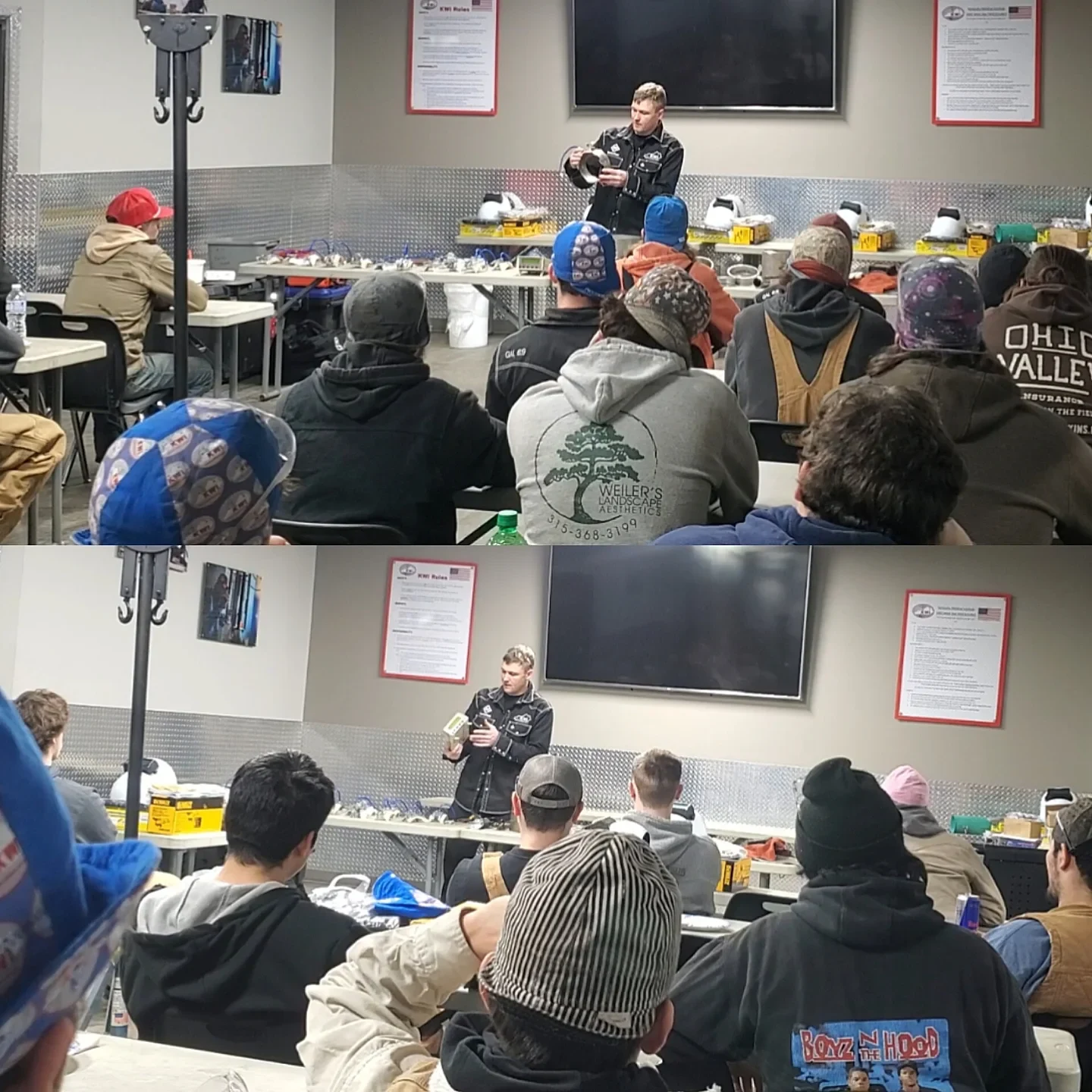
From foundational pipe skills and apprentice development to advanced-alloy execution. Each engagement starts with your experience and the next requirement.
Engagements can focus on a single welder, a project team, an instructor, or a repeatable employer training program.
Start with an observed baseline. Identify what each welder can do, where the gaps are, and the next practical steps.
Prepare for the actual procedure, process, position, and joint. Use failed-test observations to guide focused practice.
Develop the preparation, shielding, thermal discipline, and technique required when moving into more demanding materials.
Connect the technique learned in practice to the fit-up, access, sequence, and consistency needed on the shop floor.
Help instructors and supervisors teach consistently, recognize the same issues, and evaluate performance against shared criteria.
Build a repeatable internal development system around your materials, procedures, equipment, and project requirements.
A difficult technique becomes teachable when the welder can understand its individual movements and see how they affect the weld.
Instruction combines demonstration, observation, focused practice, and direct correction. The aim is to connect hand position, torch or electrode control, filler delivery, and weld-pool behavior with a result the welder can recognize and repeat.
Material knowledge and procedural discipline stay connected to the practical exercise.
The agreed training scope determines the records and recommendations delivered.
Skills matrices and observed performance help identify appropriate next assignments and qualification preparation.
Individual development plans connect specific technique or knowledge gaps to practical exercises.
Work instructions, visual standards, assessment criteria, and instructor development support consistent follow-through.
Yes. Share the material, process, pipe size, wall thickness, position, and applicable procedure. The engagement can be scoped around the specific skill or qualification requirement.
Delivery can be arranged at a client site, project location, or suitable partner facility. Equipment, consumables, safety arrangements, access, and scheduling are agreed before the work begins.
Training and qualification preparation develop readiness. Any required qualification test, witnessing, examination, and certification follows the governing code and the responsible employer or qualified organization’s requirements.
Yes. A focused assessment and remediation engagement can address a recurring issue without requiring a broad training program.
Tell us about the team, the work, and the skills you want to develop.
Cavitar C400 footage captured during demonstrations at Kentucky Welding Institute. Observe the arc and weld pool at close range.
90/10 copper-nickel demonstrations with a close view of filler delivery, the keyhole, and weld-pool movement.